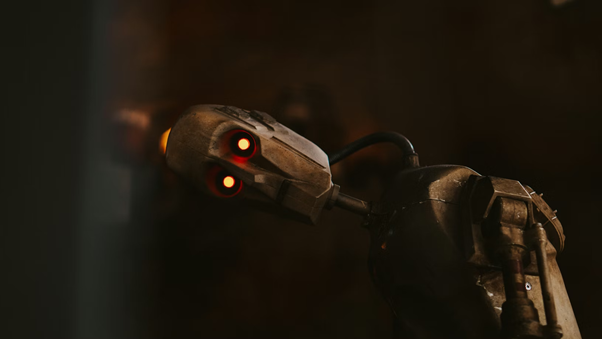
In the Star Wars saga, the Force is often credited with guiding the destiny of heroes. However, beneath this mystical veneer lies a more calculated force: probability. While organic beings rely on intuition, the millions of droids populating the galaxy operate on complex algorithms and internal Random Number Generators (RNG). From the frantic bleeps of an astromech in a dogfight to the precise translations of a protocol droid, randomness is the invisible hand determining whether a mission succeeds or ends in scrap.
Droids are sentient processors of entropy. In the real world, RNG is the mathematical backbone of modern computing, ensuring that everything from encryption to gaming remains unpredictable. In the Star Wars universe, this manifests as “personality quirks” or the uncanny ability of a droid like R2-D2 to find a specific terminal in a sprawling base. This isn’t just luck—it is a high-speed simulation where the droid chooses the path with the highest statistical likelihood of survival, even when those odds seem impossible to others.
The Binary of Luck: Droid Personalities as Adaptive Algorithms
Most droids develop what we perceive as “luck” by skipping regular memory wipes, allowing them to develop sophisticated machine learning subroutines. When C-3PO famously exclaims about survival odds, he is performing literal RNG analysis, seeing chaos as a series of mathematical hurdles. R2-D2, conversely, operates on aggressive heuristics. He doesn’t just calculate odds; he bets against them, utilizing internal subroutines that mirror high-risk, high-reward mechanics.
This intersection of calculation and unpredictable outcomes is where droids meet the thrill of modern gaming. Just as an astromech might bypass a circuit to save a ship, players often look to interact with randomness directly. For those wanting to experience this mechanical rush without planetary stakes, exploring a free slots demo provides a perfect laboratory. In these environments, “bonus buy” features act like a droid’s emergency override—allowing a user to skip the standard cycle of probability and jump straight into the high-intensity event subroutines of the software.
The way droids interact with galactic randomness can be categorized by their functions:
- Astromech Droids: Utilize RNG to perform “hot-fixes” where success depends on fluctuating power levels.
- Protocol Droids: Use probability to navigate social minefields where a single wrong word causes diplomatic incidents.
- Battle Droids: Operate on a hive-mind RNG that dictates fire patterns and tactical movements.
- Assassin Droids: The most dangerous users of probability, calculating the exact millisecond a target is vulnerable based on atmospheric drift.
Because droids are walking computers, they understand that “luck” is just a sequence of favorable numbers. When a droid survives a firefight, it is because their internal RNG successfully navigated a trillion-to-one path of projectiles. This data-driven survival allows them to function in extreme environments where organic brains would likely freeze under pressure.
Calculating the Unpredictable: Strategy in a Random Galaxy
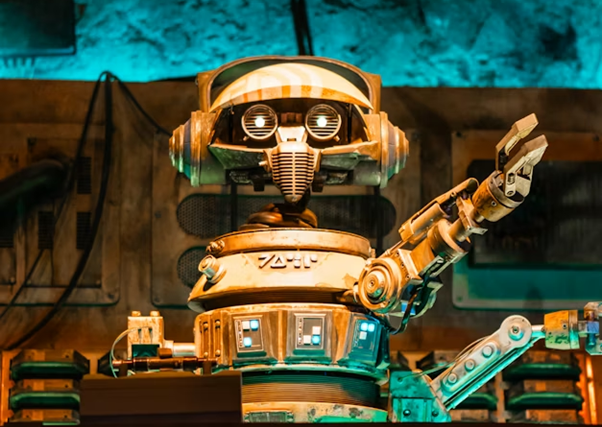
If everything is governed by RNG, strategy remains the vital differentiator. Successful individuals in the Star Wars universe are those who know how to tilt the odds in their favor. Han Solo’s actions—upgrading the Falcon’s sensors and trusting a droid’s navigation—are essentially forms of risk management. He builds a better “player strategy” to beat the house, which in his case is the Galactic Empire. This synergy is what makes the most famous ships effective; they are ecosystems of probability.
In our own world, the quest to find patterns in the chaos is just as prevalent. Whether a droid is calculating a jump to lightspeed or a person is analyzing software, the goal is consistency. Understanding the underlying mechanics of any system is the first step toward mastery. Just as a technician studies a droid’s logic board to improve its performance, many enthusiasts look for winning strategies for slots to better understand how volatility and hit frequencies dictate outcomes. It is the study of the “machine’s mind,” looking for the edge where logic meets the unpredictable nature of code.
The parallel between a droid navigating a nebula and a player navigating a complex game is striking. Both require a deep understanding of the rules and a respect for the power of the RNG. Droids remind us that even in a world of pure mathematics, the most unlikely outcome can still become a reality. Their ability to “glitch” into a heroic moment is perhaps the most human thing about them, proving that the most unlikely outcome can be achieved through persistent calculation.
The Future of Probability in the Galactic Frontier
As we look toward the future, the role of droids and their internal RNG will become more central. We are moving toward a galaxy where machines aren’t just reacting to randomness; they are shaping it. This evolution mirrors our own technological journey, where we seek to harness the random to create more engaging experiences.
The next time you see a droid fix a hyperdrive at the last second, remember you are witnessing the triumph of the algorithm. In a galaxy defined by chance, those who speak the language of probability hold the power. Whether through a digital interface or a cockpit in the Outer Rim, the dance with RNG is the heartbeat of the adventure.